

jeanne
Where Jeanne is from, a small island on Lake Kivu, most people work in subsistence agriculture to gain food and do not have an income generating job at all. Jeanne herself had moved in with her extended family at a young age when her own parents passed away. As is common on her island, she was not able to attend school and joined in the strenuous daily labor of agricultural upkeep. However, she always held a dream of becoming a seamstress. Even though it is extremely uncommon on her island for anyone, especially a woman, to work in a skill-based sector or make a cash income, she dreamed of learning a trade and opening a shop to provide people with clothes, uniforms, and other items. But how? She continued to work and live alongside her relatives and found herself growing close to her young nephew. When he fell sick, Jeanne did everything she could but the infection only spread and Deste grew weaker. The family held a meeting, announcing that there was nothing left for them to do to help him, and that they must resign themselves to the fact that the little boy would not recover. But Jeanne refused to give up. That night, she took Deste to a boat in secret, rowing for hours for the Rwandan shore. She had heard of a hospital there, and though she wasn’t sure how to get there, and had no money to pay the medical bills, she was desperate to save her nephew.

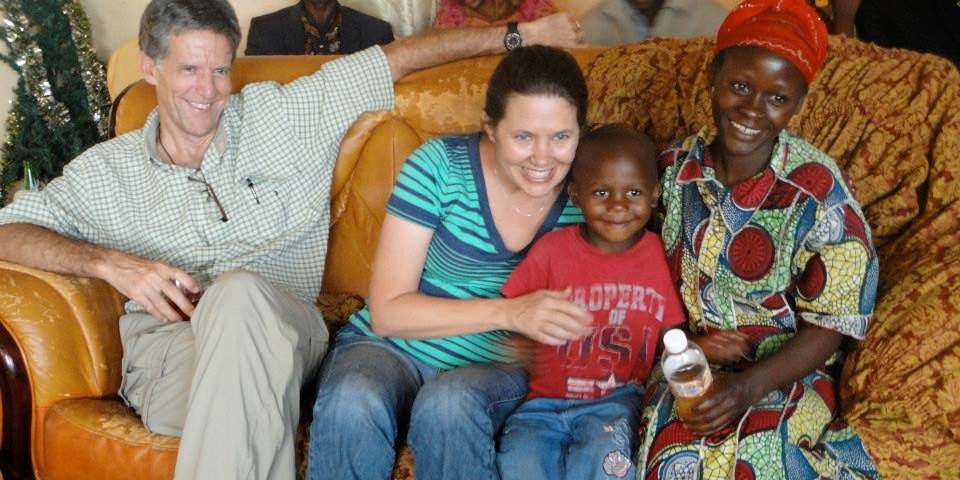
Days later, Jeanne found the hospital in Kibogora, a small town in the mountains of Rwanda’s western province. Deste was accepted for surgical care and recovery, and Jeanne stayed in the children's ward, collecting gifts of food from other families to give to Deste. During this time, she met Linda and Ruth Berg, the wife and daughter of a missionary doctor, Dr. Tim Berg, working at Kibogora hospital. The Berg family developed a close friendship with Jeanne, and through her, the Bergs also learned Deste’s story and fell in love with the charismatic boy. Jeanne frequently suggested that the Berg family should adopt Deste. She told them that her nephew needed care beyond the hospital that she knew an American family had the means to provide. She also knew that both she and Deste did not have the option to return back home to their island. Her relatives back home would be furious she had disobeyed the elders’ decision when she chose to take Deste to the hospital, and it would never be safe for them to return home again. A few years later, Jeanne’s dreams for Deste became a reality when he finally became an official member of the Berg family.Jeanne was glad to see her nephew healthy, happy, and loved by adoptive parents. But what was next for her own life? Jeanne was now considered too old to go to school, and she had no family in Rwanda to support her. Without school or other training, there were few opportunities for her as she entered adulthood. The Berg family and Jeanne’s new friends in Kibogora began to ask Jeanne how they could support her to fulfill her own dreams, now that she was no longer responsible for her nephew. Jeanne shared her vision of running a sewing shop, and arrangements were made for her to receive training from two local seamstresses, Sarah and Jeanette. The three of them quickly formed a group rapport and became the Seka Sewing Co-op. The women continued to add new members.

One day, the women saw some colorful bags that Linda Berg had brought back to Kibogora from a shop in Rwanda’s capital. They decided to try to make some of their own, and succeeded that very afternoon. When they showed the work to Linda, she loved it. So the women asked Linda if she could help them sell these bags to people she knew in the US. Linda is an enthusiastic yes-woman, and agreed immediately. At this point, the vision for Seka Handbags as it exists today was born! Today, Seka’s bags support a growing community of women like Jeanne, and their families in rural Rwanda. For most of Seka’s seamstresses, selling these bags is the primary way they are able to provide for their children. If you are interested in purchasing a bag or other item from Seka, please use our contact information to inquire!
As the years went by, the Berg family found themselves moving to a rural area in Kenya, where they also met many families in need of emergency aid, assistance with tuition, and more. Rural areas in Kenya rely heavily on subsistence farming, leaving families here extremely vulnerable to environmental issues such as droughts or floods. There is also a regressive tax system in Kenya, making it incredibly difficult for the poor to ever leave poverty. The Bergs witnessed this firsthand during their time in Kenya, which is what led Linda to morph Seka Handbags into Kivu Love - an organization that would not only provide employment for the women of Seka, but provide stability in many areas for families in Rwanda, the DRC, and Kenya as well.